
Collaborations
Strategic collaborations are central to 9Bio’s mission to advance innovative protein-based therapeutics. The selected examples below illustrate how our computational protein engineering platform can be applied to solve complex therapeutic design challenges, including tumor-selective binding, conditional activity, and multidimensional specificity.
Together, these success stories reflect the potential of our approach to create differentiated biologics for challenging cancer targets.
9Bio’s structure-guided approach helped us explore new strategies to improve our therapeutic candidates. Their team brings strong technical depth to complex engineering challenges, making them a valuable partner for advancing innovative protein therapeutics.
Having worked with 9Bio through a previous biotech venture, it was natural to continue the collaboration at RivioBio. Their scientific insight and creative thinking help strengthen drug development programs and turn ideas into practical next steps.
Success Stories
Engineering pH-Dependent Binding Tumor Selectivity
Many clinically relevant tumor-associated antigens are also expressed in healthy tissues, limiting the therapeutic window of antibody-based therapies and increasing the risk of on-target, off-tumor toxicity.
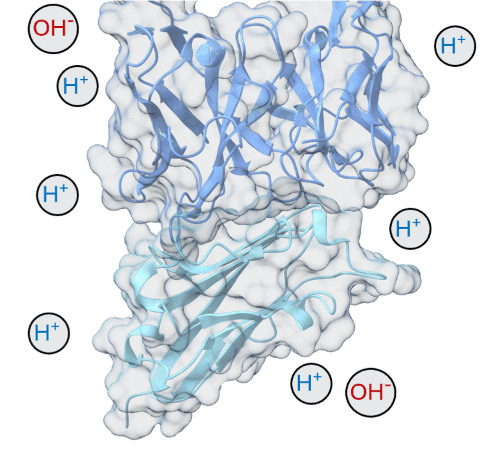
9Bio engineered a conditionally active version of a known antibody targeting a broadly expressed tumor-associated antigen. Using structure-guided computational engineering and dynamic interaction modeling, the antibody was redesigned to preferentially bind under tumor-associated microenvironmental conditions while reducing binding under normal physiological conditions.
The engineered antibody demonstrated highly selective binding and potent tumor cell killing across multiple cancer cell lines under disease-relevant acidic pH conditions, while showing no detectable activity at pH values associated with normal healthy tissues.
This case illustrates how 9Bio’s platform can be used to re-engineer validated antibody frameworks into more selective therapeutic candidates with the potential to expand the druggability of challenging tumor targets.
Physiological pH environment: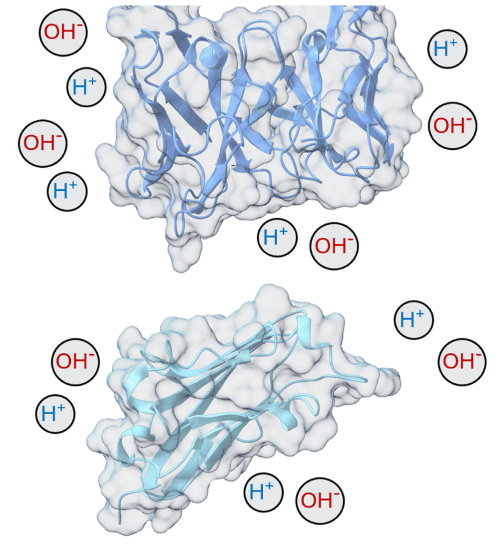
Tumor acidic micro-environment:
Engineering Multidimensional Tumor Specificity
Peptide-MHC targets offer a powerful opportunity to recognize intracellular cancer drivers that are otherwise inaccessible to conventional antibody therapies. However, achieving high specificity is technically challenging, particularly when mutant tumor-associated peptides differ from wild-type peptides by only a single amino acid. In this case, the initial lead antibodies showed incomplete specificity, creating a risk of cross-reactivity with closely related wild-type peptide-MHC presentations.
9Bio collaborated with a partner developing antibodies against a mutant intracellular oncogenic protein presented as a peptide-MHC-I complex. Using structure-guided computational modeling and iterative molecular engineering, 9Bio analyzed the binding determinants responsible for peptide recognition and redesigned the interaction interface to improve discrimination between closely related mutant and wild-type peptide presentations. Dynamic modeling was then applied to introduce an additional layer of conditional specificity based on pH-dependent binding behavior.
The engineered antibody demonstrated a multidimensional specificity profile, with binding dependent on both the single amino acid difference within the oncogenic peptide and disease-associated microenvironmental conditions. This dual-selectivity mechanism improved discrimination between tumor-driving mutant peptide–MHC targets and closely related wild-type presentations.
This case illustrates how 9Bio’s platform can be applied to highly complex therapeutic recognition challenges, including peptide-MHC targeting, by combining molecular-level antigen discrimination with tumor microenvironment-dependent binding.
Tumor mutant peptide-MHC: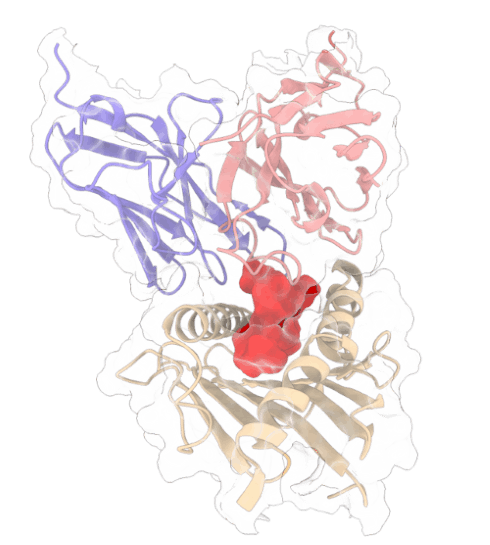
Wild-type peptide-MHC: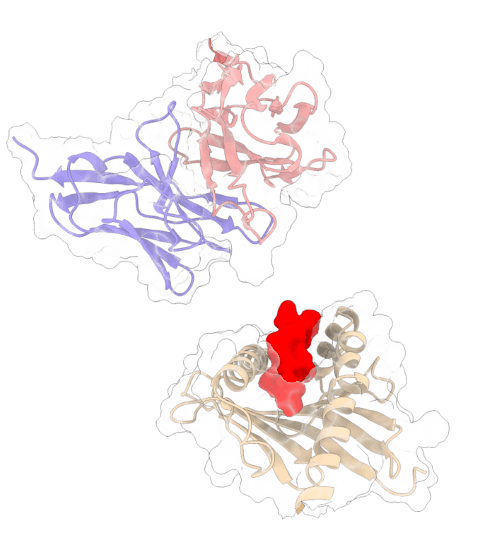
Let’s Collaborate
We are excited to take on new therapeutic design challenges and explore how our technology, scientific expertise, and collaboration network can support the development of more selective, differentiated protein-based therapeutics. Please use the contact form below to continue the conversation – we would be pleased to hear from you.
Message Sent!
Thank you for contacting us. A member of our collaboration team will review your message and reach out to you at the provided work email shortly.